
Cultural characteristics of Spain: discover traditions and innovations
Spain is a country full of fascinating cultural traditions, passionate festivals and a unique zest for life. For those planning a move to Spain, the country offers a versatile mix of history, customs and modern lifestyle. This article provides you with a comprehensive overview of Spanish culture and is a helpful companion for your emigration plans with KOCH Moving Logistics.
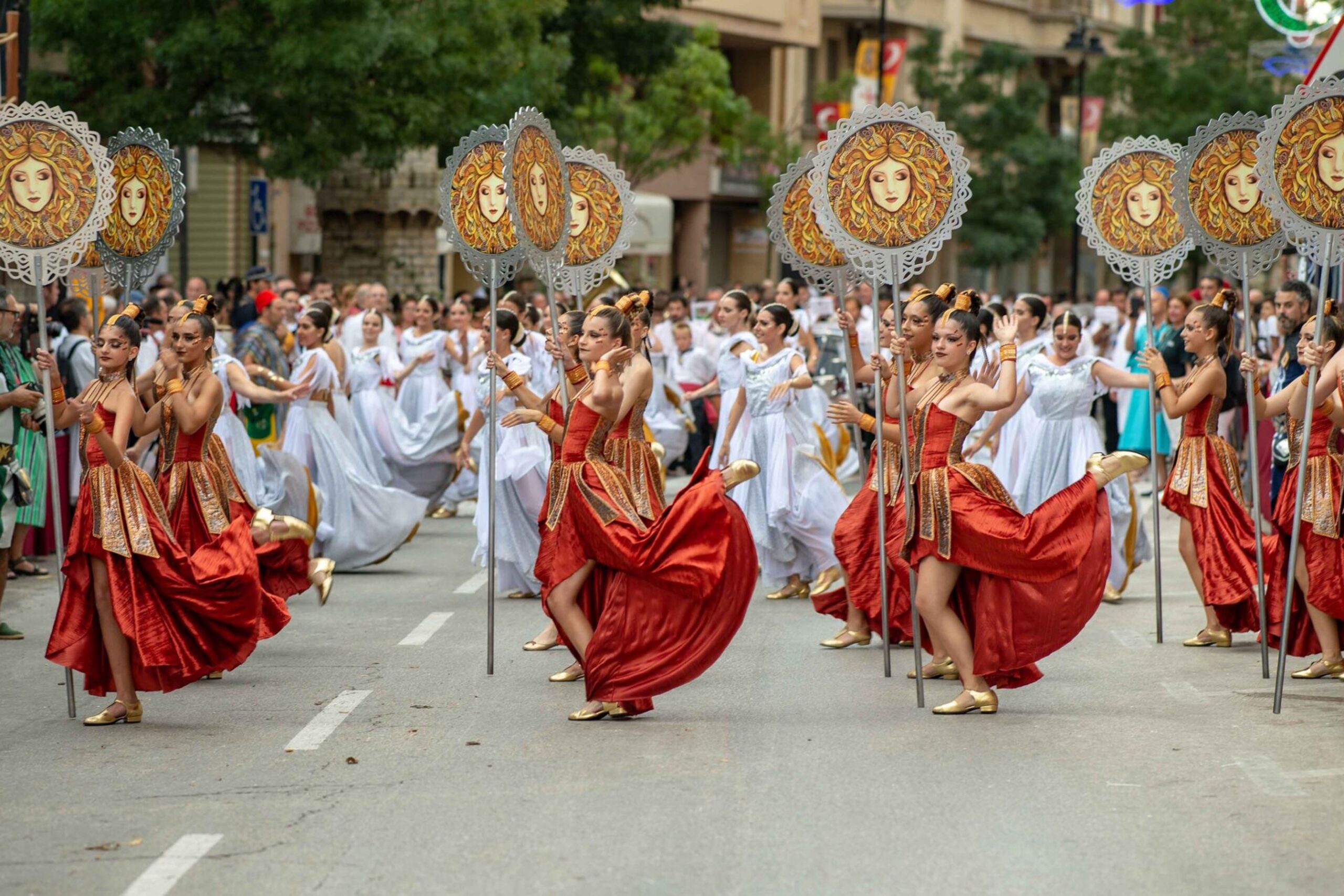
Holidays and festivals
EPIPHANY (DÍA DE LOS REYES MAGOS) ON 6 JANUARY
While in other countries the gift-giving takes place on 24 December, Spain celebrates its most important Christmas festival only on 6 January. On this day, magnificent Cabalgata processions pass through all cities and villages, where the Three Wise Men throw sweets to the cheering children. On the eve, children place their shoes filled with straw in front of the door – as fodder for the kings' camels. The next morning, they find their presents. Epiphany is a public holiday throughout Spain and far surpasses 24 December in importance.
HOLY WEEK (SEMANA SANTA) – MARCH/APRIL
Holy Week is one of the most profound and impressive religious festivals in Spain. From Palm Sunday to Easter Sunday, brotherhoods parade through the streets in processions – particularly impressive in Andalusia (Seville, Málaga, Granada). Baroque figures of the Virgin Mary and Jesus are carried through the alleys on heavy thrones borne by hundreds of penitents. The deep silence, broken only by drum rolls and the scent of incense, creates a uniquely moving atmosphere. The processions can last up to 14 hours and attract hundreds of thousands of visitors each year.
THE FALLAS FESTIVAL IN VALENCIA – FROM 1 TO 19 MARCH
The Fallas festival in Valencia is a firework display of a special kind. Over weeks, huge, artistic sculptures (Ninots) made of papier‑mâché are created throughout the city, often satirically reflecting current events. The streets are filled with the Mascletà, a deafening daily firecracker firework. The highlight is the Nit del Foc (Night of Fire) from 18 to 19 March, followed by the Cremà, the ceremonial burning of all the figures – a spectacle of fire, light and emotion that welcomes spring. The festival has been on the UNESCO List of Intangible Cultural Heritage since 2016.
THE FERIA DE ABRIL IN SEVILLE – TWO WEEKS AFTER EASTER
The Feria de Abril is the great spring festival of Andalusia and transforms Seville for a week into a sea of colour and joie de vivre. Thousands of colourful lanterns and garlands decorate the huge fairground, on which hundreds of Casetas (tents) are erected. Here people dance until the early hours of the morning – flamenco and Sevillanas – drink sherry and celebrate the Andalusian way of life. Women wear traditional flamenco dresses, men ride in elegant carriages or on horseback across the grounds. The Feria begins two weeks after Semana Santa and attracts over a million visitors each year.
THE BULL RUNNING FESTIVAL OF SAN FERMÍN IN PAMPLONA – FROM 6 TO 14 JULY
12 October is Spain's National Day. It commemorates the discovery of America by Christopher Columbus in 1492. In Madrid, the grand military parade takes place under the command of the King – the most important military ceremony in the country. At the same time, it is the day of the Spanish‑speaking world (Día de la Hispanidad). Many museums, including the Prado, open their doors free of charge. Throughout Spain, people fly the flag, and numerous cultural events take place.
LA NOCHE VIEJA (NEW YEAR'S EVE) ON 31 DECEMBER
CULINARY TRADITIONS – MORE THAN TAPAS AND PAELLA
THE SPANISH GREETING – WARM, CLOSE AND DIRECT
The biggest hurdle for German immigrants is often not the language but the sudden spatial closeness. Greetings in Spain are far warmer than in Northern European cultures. A firm handshake is the common form of greetingin a business context. Among friends, acquaintances and often even with new acquaintances in private settings, however, two cheek kisses are given – starting on the right. This is a gesture of warmth and trust, not a romantic advance.
The address "Señor" or "Señora" with the surname used to be standard, but today, except in very traditional industries or when addressing older people, it is less common. Much more often, you will quickly be addressed informally, accompanied by a warm hug (abrazos) among men who are closer.
TABLE MANNERS – ENJOYING WITHOUT RUSH
In Spain, people eat late. Lunch (la comida) is taken no earlier than 2 p.m., dinner (la cena) often only after 9 p.m. People take their time, because a meal is a social event. Unlike in Germany, the bill is not split, but is usually paid in advance by one person or divided among friends. If you are invited to dinner, you are welcome to bring a bottle of wine, chocolates or a dessert for the hosts. In bars, tipping (una propina) is customary, especially if the service was good – in restaurants about 5‑10 percent.
ART AND ARCHITECTURE – FROM GAUDÍ TO THE GOLDEN AGE
Spain's cultural heritage is monumental. The country is home to painters such as Pablo Picasso, Salvador Dalí, Joan Miró and El Greco. In the vast halls of the Prado Museum in Madrid hang masterpieces by Velázquez and Goya.
Antoni Gaudí – The architect of nature – When you think of Spain and art, the unmistakable architecture of Antoni Gaudí certainly comes to mind first. The Catalan architect (1852‑1926) is the most important representative of Catalan Modernism. His style is not to be confused with that ofanyone else. Gaudí was inspired by natural forms: "Look around you. Nothing living is straight." This philosophy is reflected in his world‑famous works. The Sagrada Família in Barcelona, his unfinished masterpiece, is the most visited monument in Spain and one of the most famous churches in the world. Seven of his works have been declared UNESCO World Heritage sites.
EVERYDAY LIFE – "YOU'LL NEVER COME BACK!"
This phrase is a classic among German expats. Spanish time ticks differently. You arrange to meet "at nine", but that could also be "half past nine" – this does not mean disrespect, but a relaxed attitude to life. Shops close between 2 p.m. and 5 p.m. for the siesta – the traditional lunch break.
The siesta – A cliché with a grain of truth – The siesta is probably the best‑known cliché about Spain. In the past, it was a necessity due to the scorching midday heat, especially in the south. In reality, the Spanish now often use the two‑hour lunch break to enjoy a long meal with the family – the time for sleeping has rather receded into the background. It is part of the "decaffeinated" daily routine, in which family and sociability have a high priority.
Spanish sociability – Spaniards spend a lot of time in public space. They meet in squares, in bars, on terraces, in parks and at markets. Spanish life takes place outdoors. Meals last longer, conversations stretch on, children are often present on family outings.
Punctuality and relationships – The culture is particularly evident in business life. Personal relationships are crucial. A business lunch can achieve more than a PowerPoint presentation. Arrive on time, but do not expect meetings to start exactly at the agreed time. Agendas are guidelines, not contracts. Decisions may take longer, but once made, they are all the more sustainable.
Conclusion
The Spanish festival year is full of history, passion and community. Those who understand the culinary and cultural peculiarities will understand Spain and its people far more quickly and learn to love them. Moving to Spain means becoming part of this unique way of life. KOCH Moving Logistics stands by your side as an experienced partner to make your move to Spain smooth.
Our Spain moving service includes the following services:
- Export packaging of furniture
- Packing work complete
- Provision of packaging for overseas shipments
- Furniture dismantling
- Creation of a loading list with a number for each item
- Complete customs clearance export
- Container loading at your premises or pre-collection to our warehouse - depending on the situation
- Transportation from home/warehouse to port
- Sea freight from port to port
- Complete customs clearance import
- Transportation from port to home
- Unpacking the furniture
- Furniture assembly
- Disposal of packaging materials on the day of unloading
- Unpacking of the boxes on request - will be charged separately according to expenditure
- Terminal handling fees at the destination
- Return of the empty container to the port/terminal
KOCH Moving Logistics Ltd. offers both comprehensive service packages and individually bookable moving services for international moves to Spain. Additional services are also available upon request. Just ask us!
Based on the information you provide, we will prepare a customized and transparent offer.
Your relaxed move abroad
As a German company with over 120 years of experience, we know the special features that need to be considered when moving and ensure that your move goes quickly and smoothly.
Our moving company provides you with state-of-the-art equipment and high-quality packaging material to protect your valuables and furniture in the best possible way during transportation.
As one of the most successful moving companies in Germany, we offer you a first-class service at competitive prices. We understand that every move is unique and that's why we offer customized solutions tailored to your individual needs. Come and see us, KOCH Moving Logistics, our movers and our services for for yourself - and you will soon be one of our many satisfied regular customers.
Arrange a visit with one of our customer advisors.
KOCH Moving Logistics Ltd. will visit you on site and prepare a detailed offer for your moving to Spain.
To request advice or arrange an appointment, please call the company in Osnabrück on 0541 – 121 68 50.
Make an express request now!
Simply fill out our inquiry form and you will receive a non-binding offer for your moving to Finland. Our competent consultants will visit you on site or plan the move with you by phone. KOCH Moving Logistics Ltd. will coordinate further planning with you by phone or during an on-site appointment.
Your contact for international moves