Cultural characteristics of Finland: discover traditions and innovations
Finland is a country full of fascinating cultural traditions and modern Nordic lifestyle. For those planning a move to Finland, the country offers a unique blend of centuries‑old customs, a deep connection to nature and a pronounced culture of equality. This article provides you with a comprehensive overview of Finnish culture and is a helpful companion for your emigration plans with KOCH Moving Logistics.
Holidays and festivals
Finnish Independence Day (Itsenäisyyspäivä) on 6 December is the most important national holiday in the country. It commemorates the declaration of independence on 6 December 1917. Unlike in Germany, where German Unity Day on 3 October is celebrated with folk festivals and official ceremonies, 6 December is a rather quiet, contemplative day. Many Finns place two blue‑white candles in the window – a symbol of freedom – and watch the traditional presidential reception on television in the evening. Military parades and wreath‑layings honour the fallen of the Second World War.
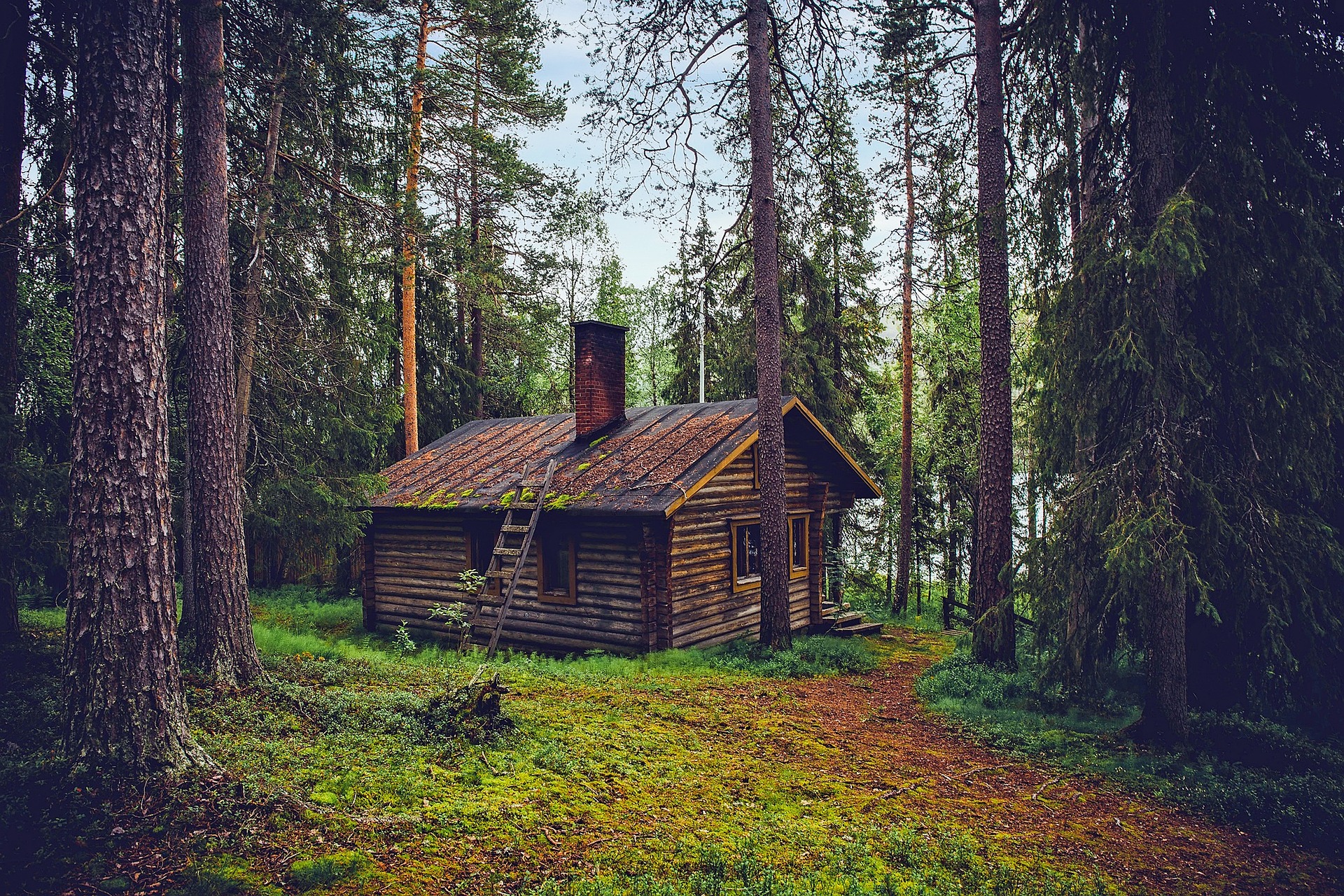
Midsummer (Juhannus) is by far the most exuberant festival of the year. Finns celebrate the longest day of the year around 20 June, when the sun hardly sets in most of the country and the midnight sun shines for weeks in Lapland. Unlike in Germany, where Midsummer is only known regionally (e.g., on Rügen), Juhannus in Finland is a nationwide folk festival during which cities are almost deserted as people move to their summer cottages (mökki). There, large bonfires (kokko) are lit – traditionally to ward off evil spirits – people sweat profusely in the sauna and grill sausages over the fire. Midsummer is significantly more popular in Finland than in Germany.
Vappu, 1 May, is the great spring and student festival in Finland. The celebrations begin already on the eve (Walpurgis Night) with a carnival‑like street festival. Thousands of students in white graduate caps parade through the cities, and speeches are held. Unlike in Germany, where 1 May is primarily a day of the labour movement, Vappu in Finland is celebrated by all generations as an exuberant picnic in the parks – with balloons, confetti, sparkling wine and traditional funnel cakes (tippaleipä).
At Christmas time Finland is the home of Santa Claus, who is called Joulupukki here. While in Germany Santa Claus brings gifts on Christmas Eve or 6 December, Joulupukki is a being that originally dates back to pagan rituals. The name literally means "Christmas goat" – a reminder of the pre‑Christian tradition of the Yule goat. Christmas Eve begins with a centuries‑old ceremony: at 12 noon in Turku, the Christmas Peace is proclaimed, which many Finns watch on television. Traditionally, the Christmas Peace is also proclaimed before going to the sauna. Many families visit the cemetery to decorate graves with candles and wreaths – a gesture that is less common in Germany in this form.
FINNISH CUISINE – HEARTY, SIMPLE AND SHAPED BY NATURE
THE FINNISH SAUNA – A NATIONAL CULTURAL ASSET AND UNESCO HERITAGE
The Finnish sauna is far more than a wellness facility – it is a national sanctuary and an integral part of Finnish identity. The sauna accompanies Finns from birth to death. People meet in the sauna, cultivate business contacts and often solve even the biggest problems. In December 2020, Finnish sauna culture was even added to the UNESCO List of Intangible Cultural Heritage. While in Germany the sauna is often seen as a pure relaxation facility or a social place, in Finland it is a space of peace and contemplation.
The traditional Finnish sauna is a pure wood sauna heated with a wood‑fired stove. The temperature is between 70 and 100 degrees Celsius. Sauna bathing is a ritual: sweating is followed by a cool dip in the lake or a quick jump into the snow – a hardening practice rarely done in Germany. Enjoying a cold bottle of beer or a grilled sausage after the sauna session is an integral part of the ceremony. Many Finns own their own sauna cottage by the lake. There are more than three million saunas in Finland for about 5.5 million inhabitants – a density that is unthinkable in Germany.
The sauna in Finland is also a place of equality: here all people are equal, regardless of their social status. Business decisions are often made after a shared sauna session. This deep embedding of sauna culture in society and the omnipresence of sauna bathing in all areas of life distinguishes the Finnish sauna considerably from German sauna culture.
ART AND ARCHITECTURE – FROM ART NOUVEAU TO FUNCTIONALISM
Finnish art and architecture are deeply rooted in Finnish nature and mythology. Alvar Aalto, Finland's most famous architect, transformed the flowing lines of lake and forest landscapes into an architecture of curves, waves and organic forms. He is considered a pioneer of new Nordic design. His buildings such as Villa Mairea or the Finlandia Hall in Helsinki are masterpieces that shaped functionalism in the 1930s. Unlike the strict German Bauhaus architecture, which often appears geometric and cool, Aalto's architecture is more organic and warmer.
Helsinki is a paradise for architecture lovers. The city experienced a flowering of Art Nouveau (Jugend) in the 19th and early 20th centuries, strongly oriented towards Finnish nature, mythology and medieval motifs. Architects created imaginative structures characterised by natural stone and wood, which appear both timeless and fairytale‑like. The best‑known examples are the main railway station designed by Eliel Saarinen and the churches of Helsinki. In Germany, Art Nouveau is mainly represented by artists' associations such as the Darmstadt Artists' Colony, which were also oriented towards nature, but whose formal language is often more ornate and lush.
FINNISH DESIGN – MARIMEKKO, IITTALA AND PLAIN ELEGANCE
Finnish design is world‑famous for its plain elegance, clean lines and respect for natural materials. It differs from German design (e.g., Braun or the Bauhaus successors) through a greater joy in colour, a often softer formal language and a deeper rooting in nature.
Marimekko, the famous design brand, was founded in the 1950s and became a symbol of cheerful, colourful post‑war Finland. The bold floral patterns and bright colours are still the hallmark of the Finns today and adorn fabrics, clothing, bed linen and tableware. The glass manufacturer Iittala is world‑famous for its timeless glass design, combining functionality with aesthetics. The famous Aalto vase by Alvar Aalto with its organic, wave‑like lines has become a design icon. The Finnish design concept follows the pragmatism of Finnish architects, who always keep in mind that design should serve the community – a mentality that is similarly strong in Germany, but with a different artistic expression.
EVERYDAY LIFE AND ETIQUETTE – DIRECTNESS, EQUALITY AND RESPECT FOR PRIVACY
Finnish culture places great importance on equality, direct communication, respect for privacy and punctuality. Finnish conversations are known for their directness: small talk is kept short, the spoken word is a clear statement of intent – unlike in many other cultures where polite phrases dominate.
– Greeting and communication: A firm handshake with direct eye contact is the usual form of greeting – both in private and in professional life. Finns are not fans of small talk. The German question "How are you?" (meaning how you really are) might irritate a Finn, as he would take it as genuine interest. Therefore, they limit themselves to a short, polite "How are you?" without expecting a detailed answer.
– Punctuality: Finns are extremely punctual and consider it disrespectful to be late. Unlike in Germany, where a small delay of 5‑10 minutes is often tolerated in a private context, a delay of five minutes in a private setting is already considered rude in Finland. Tardiness is met with a short, polite apology.
– Equality: Finnish society is characterised by a pronounced culture of equality that is reflected in all areas of life. Titles hardly matter in Finland, and everyone uses the informal address (the formal "Sie" does not exist in Finnish). This also applies to superiors and professors. Gender equality is firmly anchored by law and in society, which is also evident in shared parental leave and the high female employment rate.
In Finnish restaurants, tipping is generally expected to be done by card payment. Service is usually always included in the price – it is perfectly acceptable not to leave a tip. Finnish and German systems: In Germany, the expectation is 5‑10 percent. In Finland, the rule is to round up or leave a small tip.
Conclusion
Finland delights with a fascinating, idiosyncratic culture strongly shaped by the deep connection to nature, the concepts of sisu (determination) and modern egalitarian culture. From the exuberant Midsummer bonfires to the glowing candles of Independence Day, the ubiquitous sauna to the cosy Christmas traditions – the Finnish way of life is unique. Those who understand the cultural peculiarities of the country will understand Finland and its people far more quickly and learn to love them. Moving to Finland means becoming part of this unique way of life – from the everyday appreciation of nature to the relaxed work culture to the festive holidays. KOCH Moving Logistics stands by your side as an experienced partner to make your move to Finland smooth.
Our Finland moving service includes the following services:
- Export packaging of furniture
- Packing work complete
- Provision of packaging for overseas shipments
- Furniture dismantling
- Creation of a loading list with a number for each item
- Complete customs clearance export
- Container loading at your premises or pre-collection to our warehouse - depending on the situation
- Transportation from home/warehouse to port
- Sea freight from port to port
- Complete customs clearance import
- Transportation from port to home
- Unpacking the furniture
- Furniture assembly
- Disposal of packaging materials on the day of unloading
- Unpacking of the boxes on request - will be charged separately according to expenditure
- Terminal handling fees at the destination
- Return of the empty container to the port/terminal
KOCH Moving Logistics Ltd. offers both comprehensive service packages and individually bookable moving services for international moves to Finland. Additional services are also available upon request. Just ask us!
Based on the information you provide, we will prepare a customized and transparent offer.
Your relaxed move abroad
As a German company with over 120 years of experience, we know the special features that need to be considered when moving and ensure that your move goes quickly and smoothly.
Our moving company provides you with state-of-the-art equipment and high-quality packaging material to protect your valuables and furniture in the best possible way during transportation.
As one of the most successful moving companies in Germany, we offer you a first-class service at competitive prices. We understand that every move is unique and that's why we offer customized solutions tailored to your individual needs. Come and see us, KOCH Moving Logistics, our movers and our services for for yourself - and you will soon be one of our many satisfied regular customers.
Arrange a visit with one of our customer advisors.
KOCH Moving Logistics Ltd. will visit you on site and prepare a detailed offer for your moving to Finland.
To request advice or arrange an appointment, please call the company in Osnabrück on 0541 – 121 68 50.
Make an express request now!
Simply fill out our inquiry form and you will receive a non-binding offer for your moving to Finland. Our competent consultants will visit you on site or plan the move with you by phone. KOCH Moving Logistics Ltd. will coordinate further planning with you by phone or during an on-site appointment.
Your contact for international moves