Understanding healthcare and health insurance in Denmark
Moving to Denmark – to the land of hygge, cycling culture and Nordic lifestyle – brings many questions, especially regarding health coverage in case of illness. The Danish healthcare system is considered one of the most efficient in the world, but differs fundamentally from the German model. Unlike in Germany, where the system is financed through statutory health insurance with income‑dependent contributions, Danish healthcare is financed almost exclusively through taxes. This has far‑reaching consequences for emigrants. This guide answers the most important questions and shows you step by step the way to optimal health coverage in your new home.
THE DANISH HEALTH INSURANCE SYSTEM: UNIVERSAL COVERAGE FOR EVERYONE
The Danish healthcare system is considered one of the best and most digitalised in the world. It is based on the principle of universal, tax‑financed healthcare and ensures that all legal residents have access to high‑quality medical care – regardless of income, age or state of health. The compulsory national health insurance covers practically the entire population, including emigrants from the EU.
Unlike in Germany, where the healthcare system is financed through employer and employee contributions to statutory health insurance funds, Danish healthcare is entirely tax‑financed. There are no monthly insurance premiums, no co‑payments for most treatments, and no submitting of reimbursement claims. A comparison with Germany illustrates the difference: while the German system is based on a dual system of statutory and private health insurance, with contributions depending on income, Denmark has only a universal, tax‑based system without class distinctions. Basic care is financed through general taxation. The responsible national institute is the Danish Health Authority (Sundhedsstyrelsen), which sets the rates and rules for the system. The system is based on solidarity without risk selection – no one may be refused because of their state of health.
THE CPR NUMBER AND THE YELLOW HEALTH INSURANCE CARD: YOUR KEY TO THE SYSTEM
Practical access to public healthcare in Denmark does not begin upon arrival at the airport, but only with the CPR number (Det Centrale Personregister). This ten‑digit personal identification number is your key to almost all public services in Denmark – including healthcare. Without a CPR number, you are excluded from public health insurance, except for life‑threatening emergencies, which will be billed later.
After you have registered at your local citizen service centre (borgerservice) and received your CPR number, you will automatically receive the yellow health insurance card (sundhedskort).This card contains your name, address, CPR number, and the name and contact details of your assigned general practitioner. It serves as both an identity card and an insurance card.
For employees and other persons staying in Denmark for more than three months, registration for the CPR number is mandatory. Once your CPR registration has been processed, you are automatically insured for health through the public system – no separate application is required. Unlike in Germany, where registration with a statutory health insurance fund often involves choosing between different funds, allocation in Denmark occurs automatically via the CPR system.
RESPONSIBILITIES IN THE DANISH HEALTHCARE SYSTEM: A DECENTRALISED STRUCTURE
The Danish healthcare system is managed at three levels, which differs fundamentally from the centralised German system with its 16 independent state authorities:
– At the national level , the Danish state sets overall policy, the legal framework according to the Health Act (Sundhedsloven), and quality standards for healthcare.
– The five regions (regioner) run the hospitals and specialised care. They finance general practitioners and specialist doctors working in the public system.
– The 98 municipalities (kommuner) are responsible for long‑term care, home care, nursing homes, certain preventive services, some dental care, and general rehabilitation.
This decentralised structure affects daily care: depending on where you live, certain practical services such as home care or psychological support may vary, although the basic principles of care are uniform nationwide.
THE ROLE OF THE GENERAL PRACTITIONER AND REFERRALS: A MAJOR DIFFERENCE FROM GERMANY
One of the most important differences from the German system is the central role of the general practitioner as gatekeeper. While in Germany patients can often consult a specialist directly without a referral – and often do – in Denmark a referral from the GP is almost always required.
With your CPR number, you are automatically assigned a general practitioner (egen læge) near you. His or her name and contact details are on your yellow health card. The GP is the first point of contact for all non‑acute medical problems:
– Consultations for illnesses, injuries and chronic conditions;
– Issuing prescriptions;
– Referrals to specialists and hospitals;
– Sick leave certificates for your employer;
– Vaccinations and preventive examinations;
– Mental health care and referrals to psychologists.
GP visits are completely free of charge. You call the practice or use the increasingly common online booking system to make an appointment. For urgent concerns, same‑day acute appointments are generally available.
WHO IS INSURED? ACCESS FOR DIFFERENT GROUPS
Unlike in the German system, where access to statutory health insurance is tied to employment or family insurance, the Danish regulation is much simpler: anyone registered in the CPR system with a Danish address is automatically covered by the national health insurance.
This includes:
– Danish citizens;
– EU/EEA citizens registered under the rules of free movement (this includes German citizens);
– Non‑EU citizens with a valid residence permit;
– Children born in Denmark to registered parents.
Coverage begins with the processing of your CPR registration and is retroactive. No separate application for health insurance is required. For the first three months after your arrival, EU citizens can use their European Health Insurance Card (EHIC) to access public healthcare.
PRIVATE SUPPLEMENTARY INSURANCE
Denmark offers an excellent public healthcare system that covers most medical needs free of charge. Nevertheless, over 2 million Danes – about 40 percent of the working population – have private health insurance, and the reason is speed and choice. Private insurance is a supplement to the public system and allows you to skip waiting lists: for non‑urgent procedures such as knee operations or hernia repairs, public waiting times can be 4 to 12 weeks, whereas with private insurance you usually get an appointment within 1 to 3 weeks. In addition, you gain access to private hospitals and clinics, can choose from a larger network of facilities, and benefit from services such as physiotherapy without a doctor's referral (most policies include 8 to 15 sessions per year) as well as psychological counselling (8 to 12 sessions per year), which is extremely valuable given the limited public psychological care. Some policies also offer partial cover for adult dental treatment, which is not covered by the public system. Compared to Germany, where private health insurance is a full‑fledged alternative to statutory health insurance (with its own risk assessments and contribution calculations), private insurance in Denmark is designed exclusively as supplementary insurance: it does not replace public basic cover but merely adds additional benefits and shorter waiting times.
Conclusion
Moving to Denmark requires thorough preparation and an understanding of Danish administrative procedures. The Danish authorities are highly digitised – this facilitates many processes, but also requires active online registration. We at KOCH Moving Logistics support you with your move and help you navigate the bureaucratic jungle – so that your new start in Denmark is a success.
Our Denmark moving service includes the following services:
- Export packaging of furniture
- Packing work complete
- Provision of packaging for overseas shipments
- Furniture dismantling
- Creation of a loading list with a number for each item
- Complete customs clearance export
- Container loading at your premises or pre-collection to our warehouse - depending on the situation
- Transportation from home/warehouse to port
- Sea freight from port to port
- Complete customs clearance import
- Transportation from port to home
- Unpacking the furniture
- Furniture assembly
- Disposal of packaging materials on the day of unloading
- Unpacking of the boxes on request - will be charged separately according to expenditure
- Terminal handling fees at the destination
- Return of the empty container to the port/terminal
KOCH Moving Logistics Ltd. offers both comprehensive service packages and individually bookable moving services for international moves to Denmark. Additional services are also available upon request. Just ask us!
Based on the information you provide, we will prepare a customized and transparent offer.
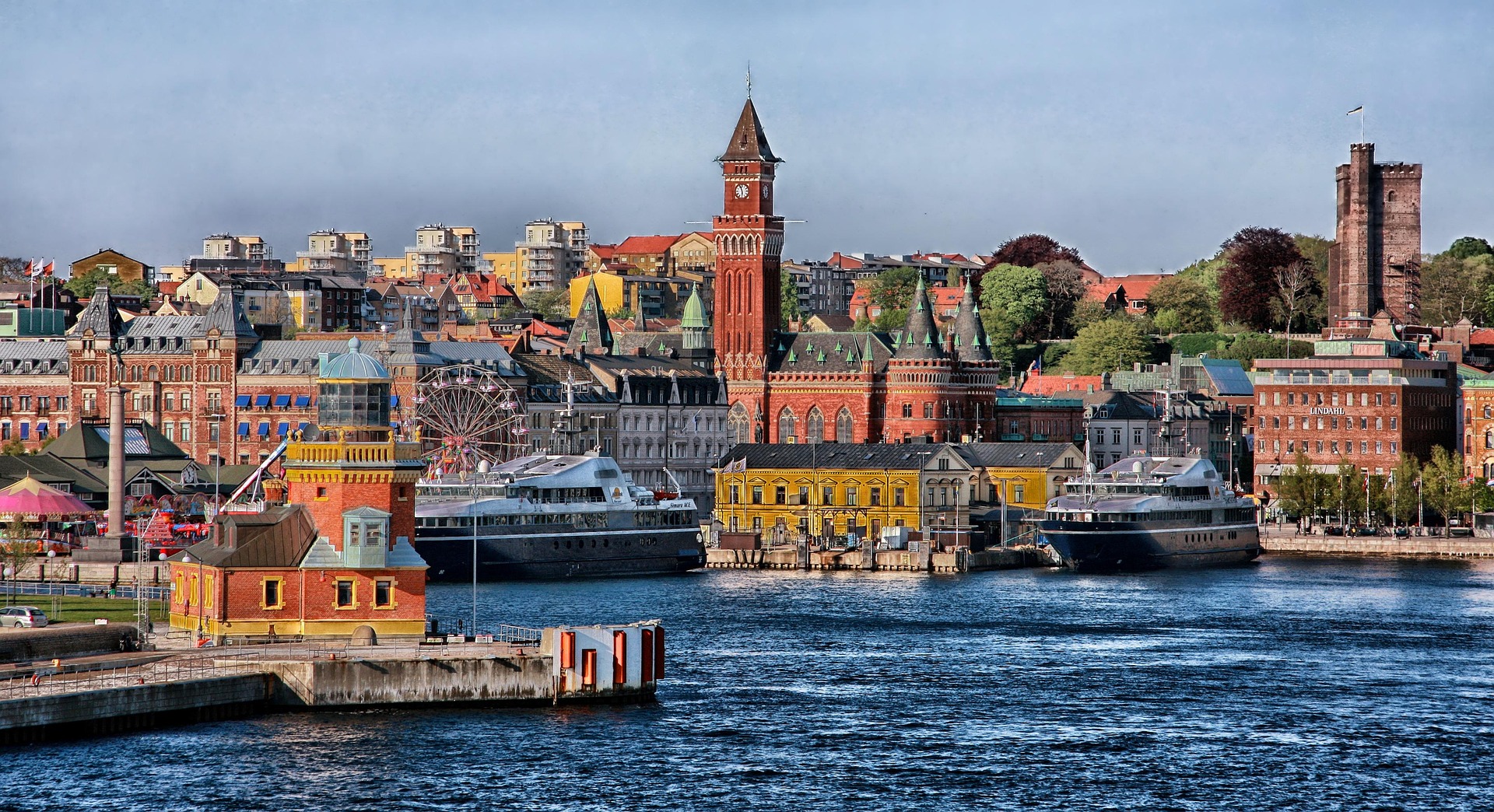

Your relaxed move abroad
As a German company with over 120 years of experience, we know the special features that need to be considered when moving and ensure that your move goes quickly and smoothly.
Our moving company provides you with state-of-the-art equipment and high-quality packaging material to protect your valuables and furniture in the best possible way during transportation.
As one of the most successful moving companies in Germany, we offer you a first-class service at competitive prices. We understand that every move is unique and that's why we offer customized solutions tailored to your individual needs. Come and see us, KOCH Moving Logistics, our movers and our services for for yourself - and you will soon be one of our many satisfied regular customers.
Arrange a visit with one of our customer advisors.
KOCH Moving Logistics will visit you on site and prepare a detailed offer for your moving to Denmark.
To request advice or arrange an appointment, please call the company in Osnabrück on 0541 – 121 68 50.
Make an express request now!
Simply fill out our inquiry form and you will receive a non-binding offer for your moving to Denmark. Our competent consultants will visit you on site or plan the move with you by phone. KOCH Moving Logistics Ltd. will coordinate further planning with you by phone or during an on-site appointment.
Your contact for international moves