
Umzug nach Australien mit KOCH Umzugslogistik
Oct 25, 2024
We would like to welcome Mr. Christian Braunschweig, who has been managing director at KOCH Moving Logistics for several months. In our first interview, he explains the concept of consolidated shipments — a cost-effective and secure option for international moving.
Date: November 12, 2025
Mr. Braunschweig, what exactly is a consolidated shipment, if we're being completely unfamiliar with the term?
Sure. Moving to another country doesn't always mean moving your entire household. Often, it's just a matter of personal belongings. In such cases, packing your belongings into your own container and shipping it around the world is not the best option. That's why we offer shared containers. These are small loads ranging from half a cubic meter to 10 cubic meters. We pick up the items, including all packaging, from the customer's home.
And the name “consolidated shipment” implies that several customers share a container, right?
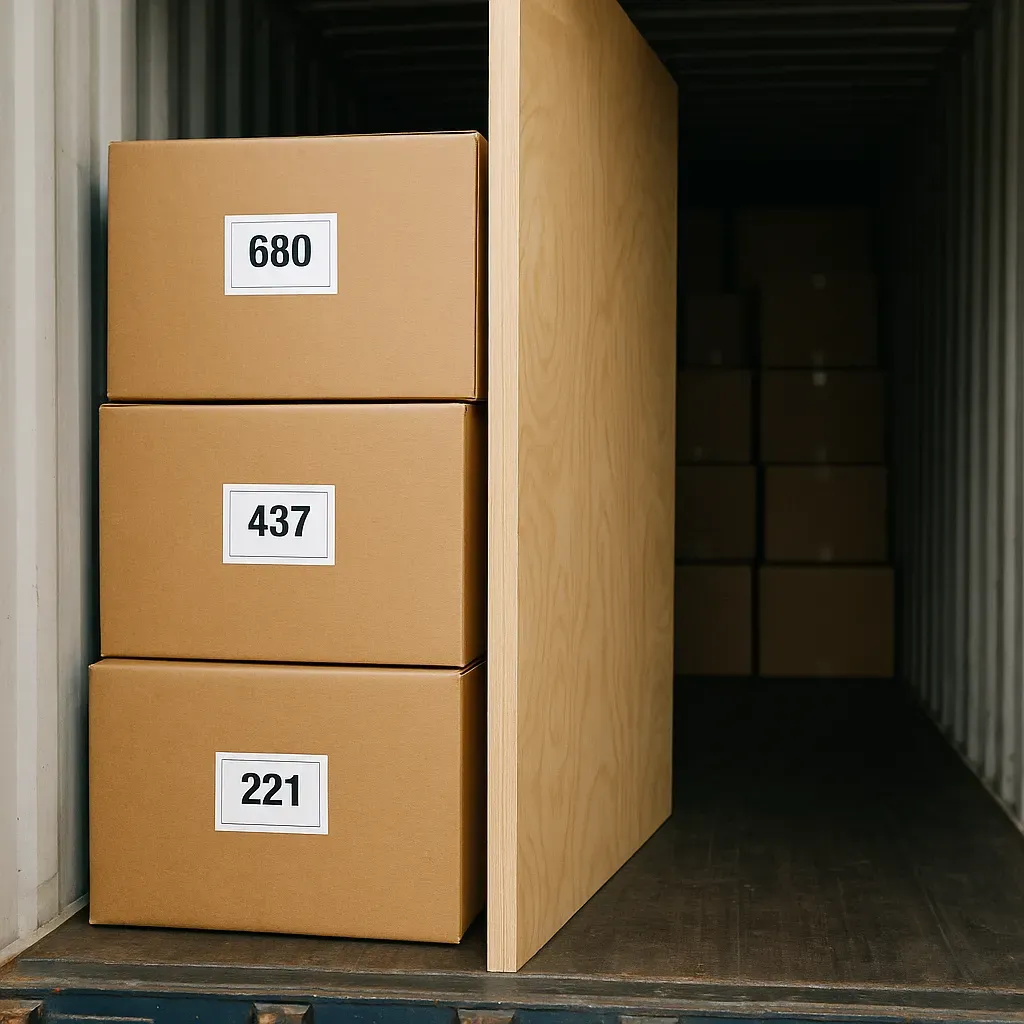
Exactly. The individual shipments are collected at a consolidation warehouse in Hamburg or Antwerp, Belgium. They are stored there until the container is full. The container then actually carries 20, 30, or 40 customers at the same time.
Sounds like a cost-saver. How much can a customer save on average by going for a consolidated shipment?
Customers can save up to 50% of costs. One major expense that is eliminated is the wooden crate, which costs between €375 and €475 for a single shipment and is not returned. However, the greatest savings potential lies in handling and port fees. For a single shipment to the US, handling costs around $500 per cubic meter at the port of entry. For a consolidated container with 20 customers, the handling of the entire container costs only $600, which is then divided among all of them. The savings are therefore incredibly high.
And are there any disadvantages to consolidated shipments?
The main disadvantage is the transit time. Outside the peak season, items collected from the warehouse in Antwerp or Hamburg may have to wait two or even three weeks until the container is full and ready to ship. If you are flexible in terms of time and do not need the items immediately, consolidated shipment is a better choice for cost reasons.
Some customers are concerned that their furniture or valuables are less secure because they are in the container with other items. How do you ensure the safety of the goods?
Every shipment is completely secure and stored separately from the others.
At the destination, our partner, for example in New York, unloads everything into their warehouse, picks the various items and then arranges for distribution in America. Our partners are also moving companies that have been operating for decades, so you don't have to worry about quality.
All in all: if a customer has time, would you always suggest a consolidated shipment?
Yes, definitely, because it saves a lot of money. It's easier, customs clearance is simpler, and the handling fees are lower. As long as it's not time-sensitive and you're not sending anything important that you need right away, this is the best option.
That's very useful information. Thank you very much for the explanations.
You're welcome.
